Why a Specialized CRM Is Better Than a Generic One
Generic CRMs are built for sales pipelines, not for working with patients or long-term programs. For doctors, therapists, and trainers, the priority is not deals — it’s people, their progress, and their care plans.
A specialized CRM is designed around real clinical workflows: exercise programs, appointments, questionnaires, and progress tracking. This reduces manual work, prevents errors, and removes the need to manage data across multiple tools.
When a system matches how specialists actually work, it becomes a support tool instead of an administrative burden — saving time and improving focus on patient care.
Daniil Ilin
Share this article
More Materials
Daniil Ilin
Common Mistakes in Creating Exercise Programs
One of the hardest parts of clinical and rehabilitation work is building exercise programs that are both structured and flexible. A common mistake is creating plans that are either too generic or too complex to maintain.
A CRM helps avoid this by supporting clear program logic: periods, weeks, days, and exercises. Specialists can reuse templates, adjust intensity, and personalize programs without starting from scratch.
When a system supports both weekly and daily programs, it becomes much easier to scale a practice while maintaining consistency and quality of care.
Daniil Ilin
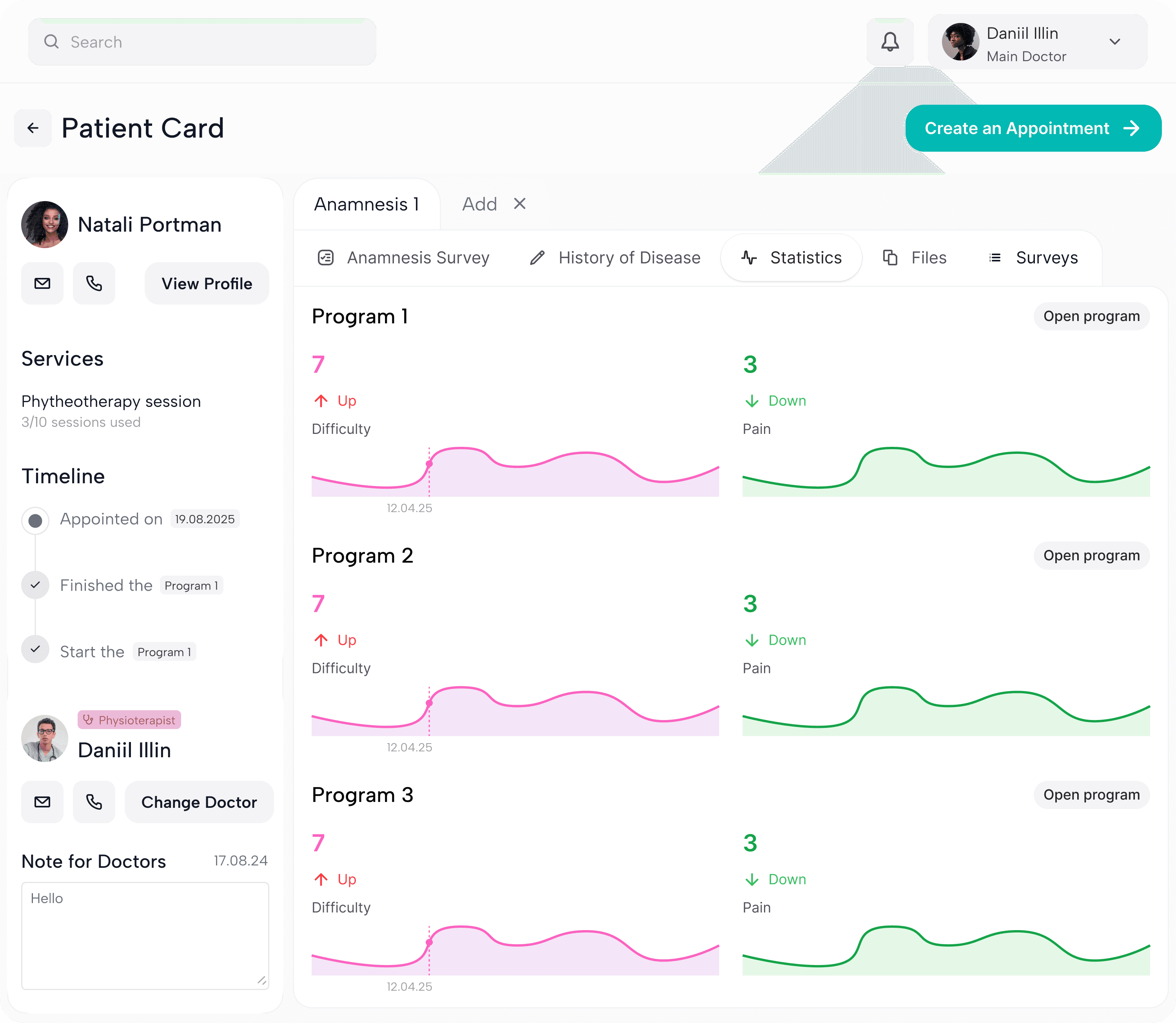
Why a Specialized CRM Is Better Than a Generic One
Generic CRMs are built for sales pipelines, not for working with patients or long-term programs. For doctors, therapists, and trainers, the priority is not deals — it’s people, their progress, and their care plans.
A specialized CRM is designed around real clinical workflows: exercise programs, appointments, questionnaires, and progress tracking. This reduces manual work, prevents errors, and removes the need to manage data across multiple tools.
When a system matches how specialists actually work, it becomes a support tool instead of an administrative burden — saving time and improving focus on patient care.
Daniil Ilin
How a CRM Helps Build Long-Term Patient Relationships
Patient care is rarely a one-time interaction. It’s an ongoing process that can last weeks or months. Without a structured system, it’s easy to lose context: assigned exercises, past visits, upcoming appointments, and recommendations.
A CRM brings everything into one place — patient history, tasks, programs, and feedback. This allows specialists to make decisions based on data, not memory or scattered notes.
For patients, this structure creates confidence. They see a clear plan, understand their progress, and stay more engaged throughout the recovery or training process.